
Criteria 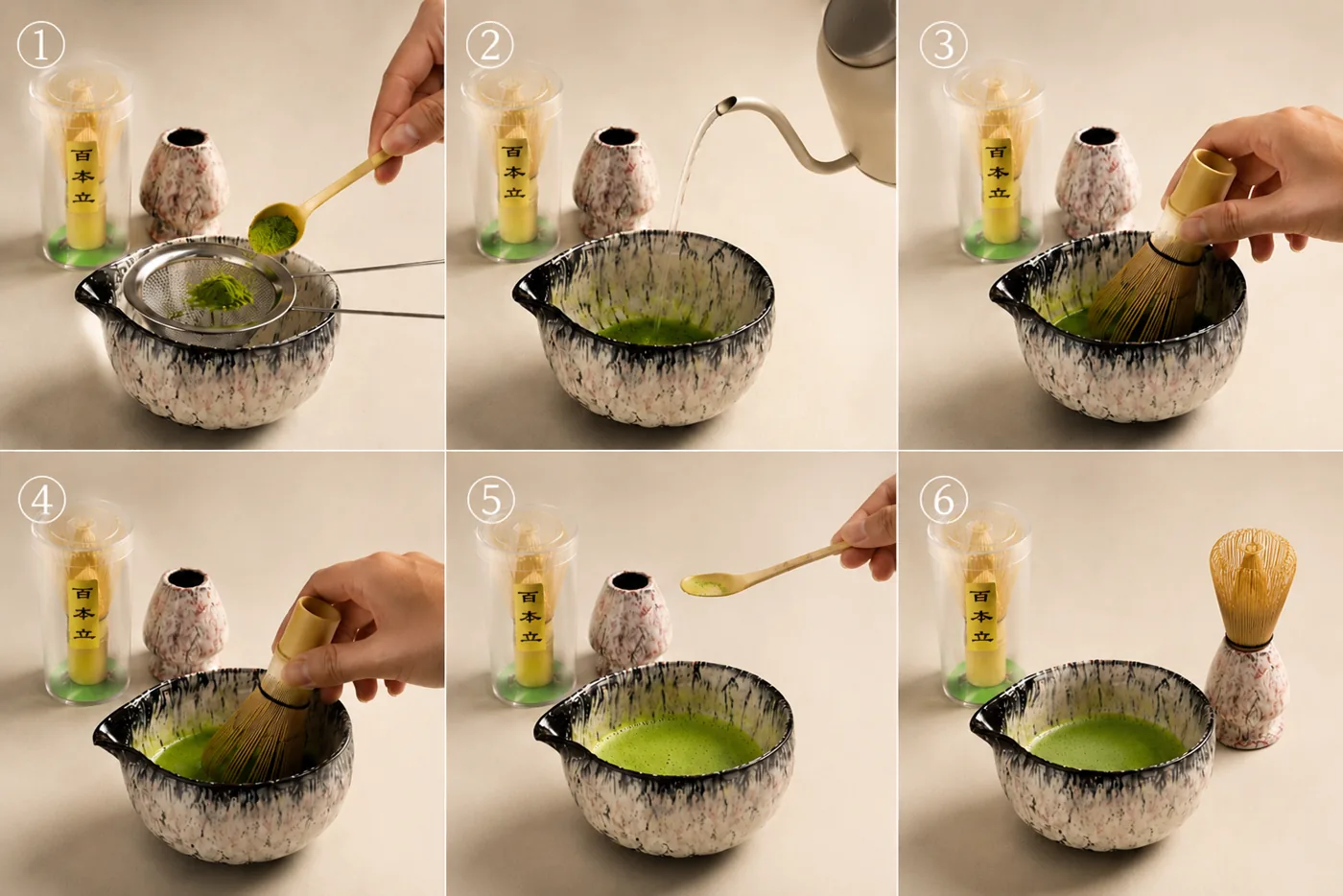
How we test matcha tools
Four properties decide whether a matcha tool earns its place on the counter: the glaze, the stability, how well it keeps a chasen's shape, and the foam it helps you make. Here is what each one means, and how the KujiMatcha holder and set answer it.
The criteria
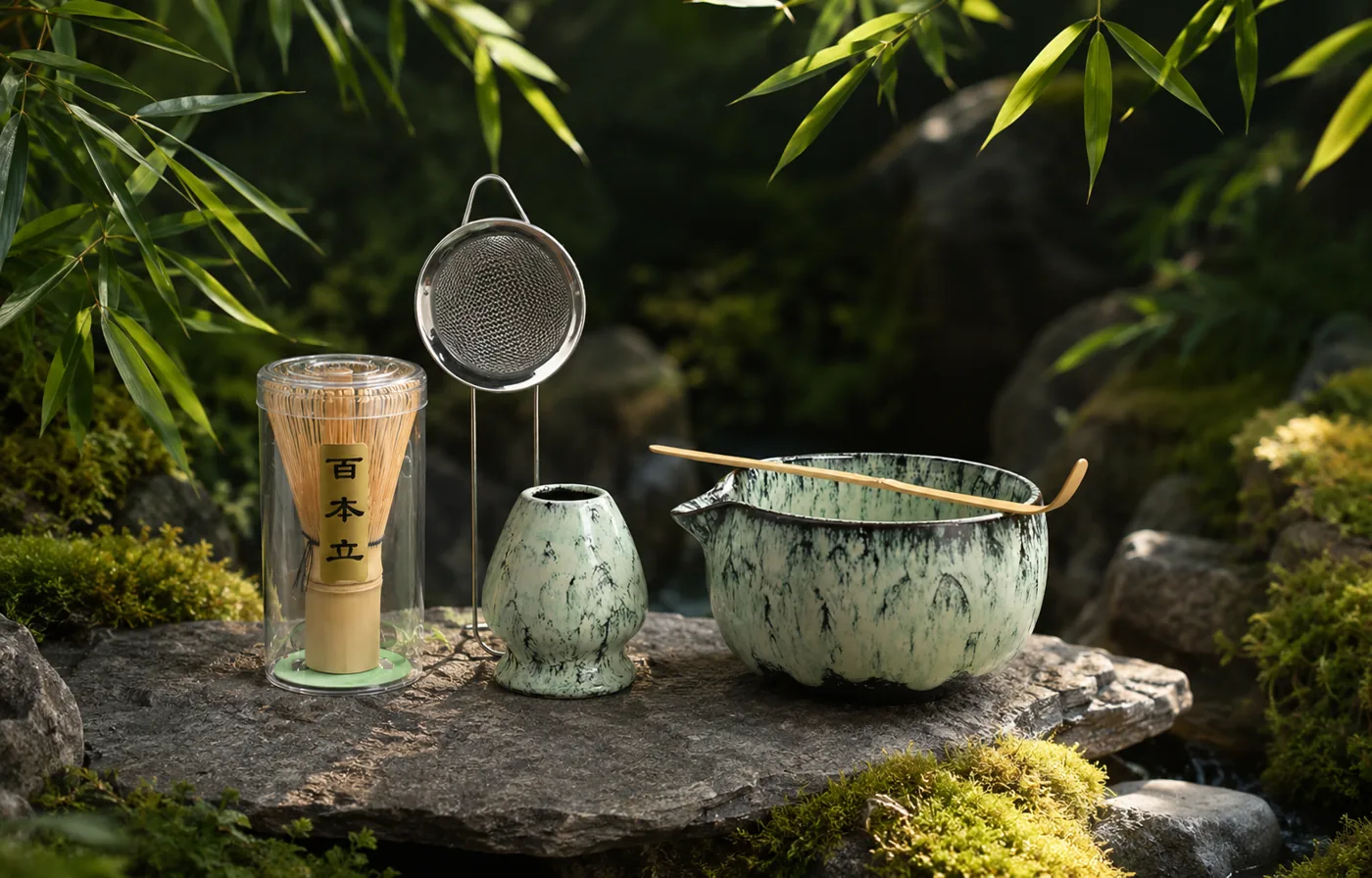
- Glaze quality. A ceramic surface that lives next to a wet whisk should be fully glazed: no pinholes, rough patches, thin spots where the clay shows through, or crazing (the fine crack network that traps moisture and stains). The KujiMatcha holder, and the bowl and holder in the set, are glazed ceramic that wipes clean with warm water and a soft cloth.
- Stability. A chasen holder lives on a countertop with a whisk perched on top, so it needs a base wide enough to bring the whisk back to rest rather than let it topple. The set's holder stands 7.5 cm tall on a 5 cm glazed base; the standalone holder is 7 cm tall and 6 cm wide. The bowl matters too: at 13 cm across and 8 cm tall, the set's spouted bowl gives a full wrist motion room without splashing.
- Shape retention. The holder's whole job is keeping a bamboo whisk's tines in their bloomed curve while it dries. That takes a rounded dome slightly narrower than the whisk head, so the tines drape outward instead of being pushed. Both KujiMatcha holders follow the traditional kuse naoshi cone, with an opening at the top so air reaches the center of the head.
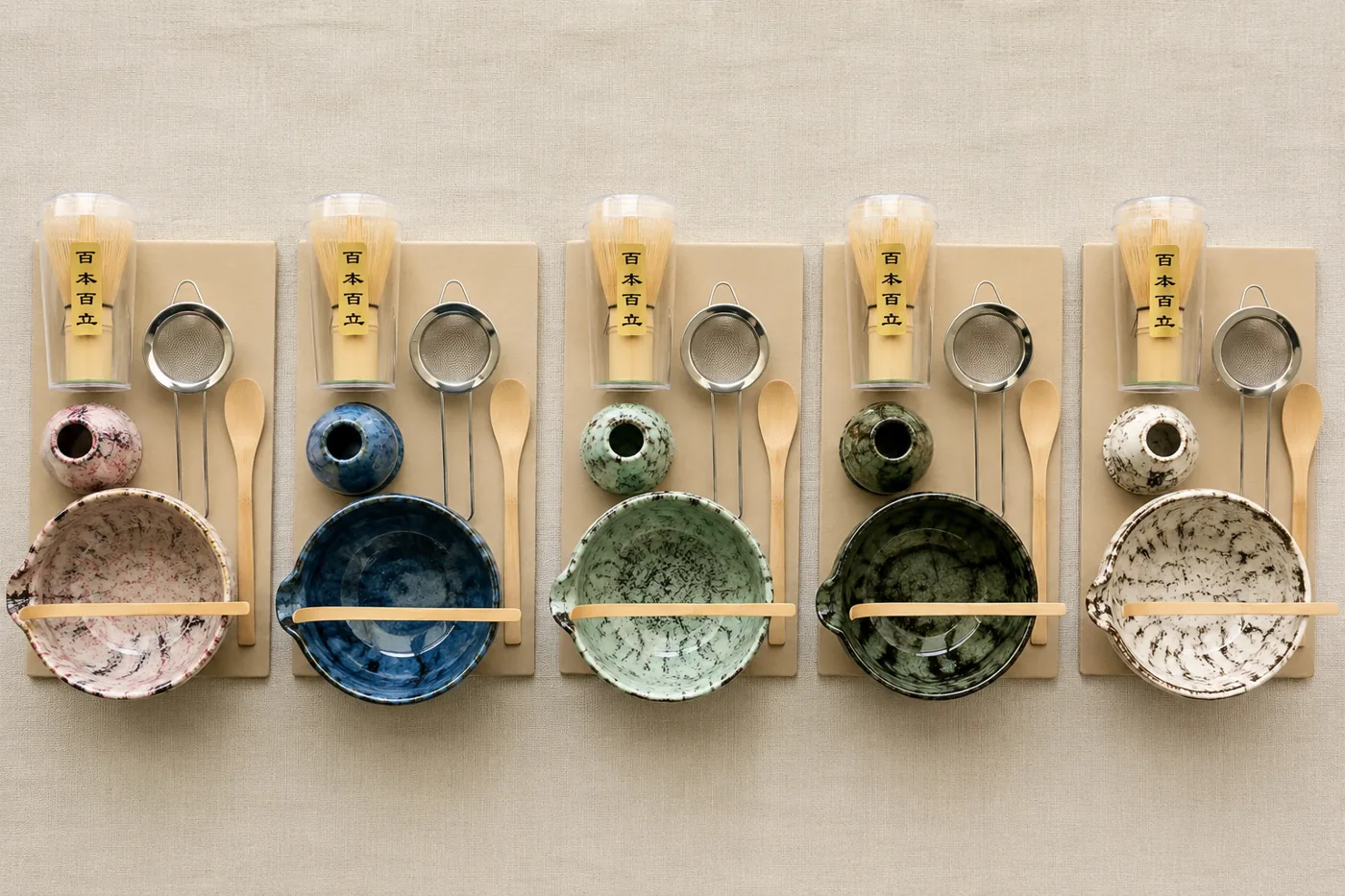
- Froth consistency. The end product is a bowl of matcha. Sifted powder, warm water and a W-motion from the wrist give an even, fine-bubbled layer of foam, as long as the whisk still has its shape; a chasen whose tines have curled inward drags through the bowl and leaves it flat. That is why the set pairs its 10.66 cm bamboo chasen with a holder, a sieve and a spouted bowl.
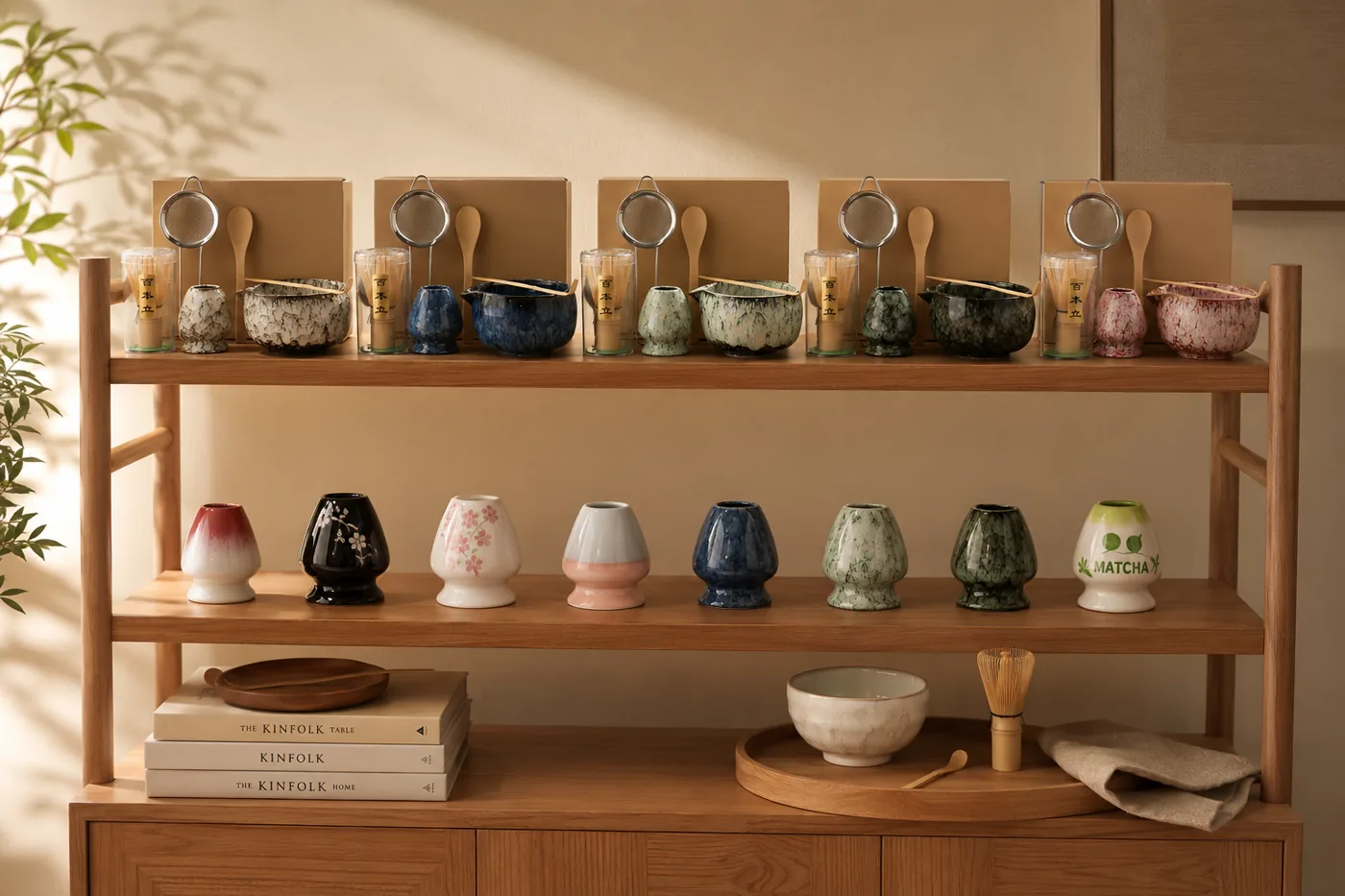
- What you see before you order. Each product page gives the dimensions, the material and every glaze on offer, and you pick your color at the secure checkout step.
The two products, the ceramic whisk holder and the 6-piece matcha set, are built around those four properties. The day-to-day routine that keeps them working is in our guides on using, cleaning, and storing a matcha whisk.
Our guarantee
Every order ships free and is backed by a 30-day money-back guarantee, so the risk sits with us, not with you. Buyer ratings and photos are on our reviews page. Questions? Start with about us or write to us via the contact page.
Get mine, $14.95 →
You'll pick your color at the secure checkout step.