
· Naomi Carter
How to Use a Matcha Whisk: Technique, Foam, and Common Mistakes
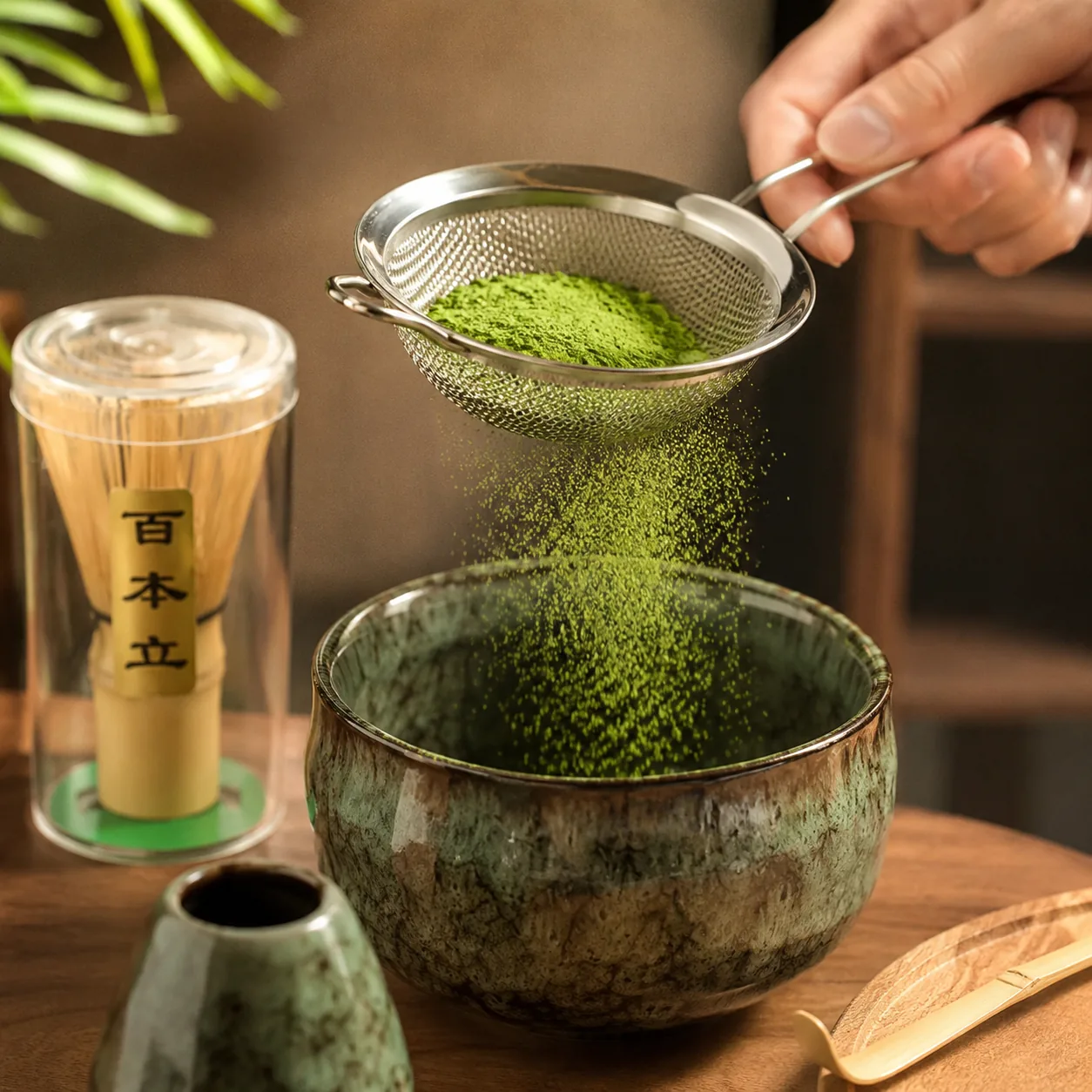
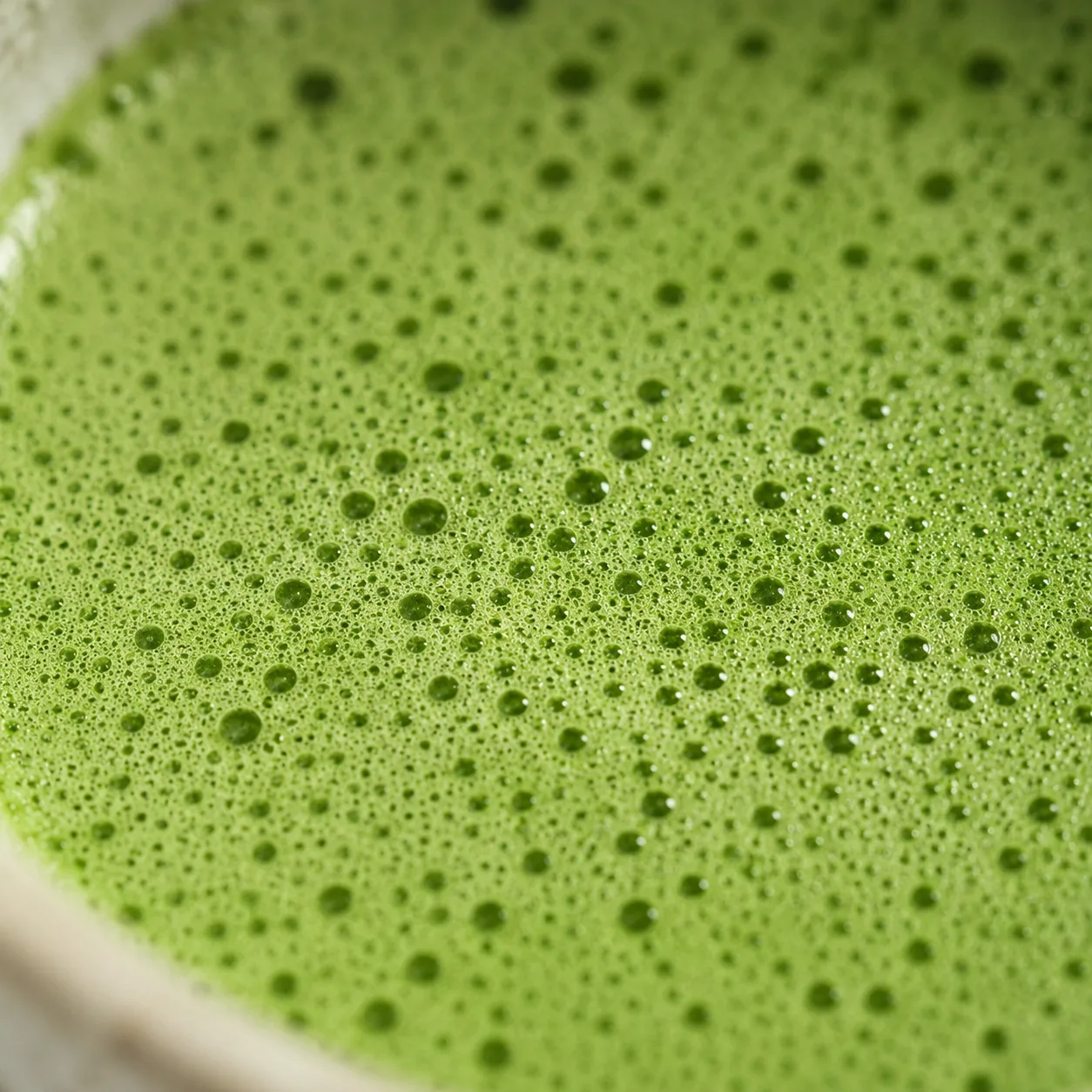
The bamboo whisk is the reason matcha made in a bowl tastes different from matcha shaken in a bottle. A chasen does two jobs at once: it breaks up every clump of powder, and it drives air into the liquid to build that dense, creamy foam. Neither job requires strength. What it requires is a loose wrist, water at the right temperature, and about thirty seconds of honest effort. Here is the full technique, step by step.
Before you whisk: set up the bowl
Good whisking starts before the whisk moves. First, soak the tines of your chasen in a little warm water for a minute or two. Dry bamboo is stiff and snaps more easily; softened tines flex through the water and shed fewer fragments. Second, sift your matcha into the bowl. Matcha clumps from static and humidity, and no amount of whisking fully breaks a clump that entered the water dry. Ten seconds with a small sieve saves you from chalky bits at the bottom of the bowl. Our 6-piece matcha set includes a stainless steel sieve with a 7 cm mesh that sits across the full mouth of its 13 cm bowl for exactly this reason.
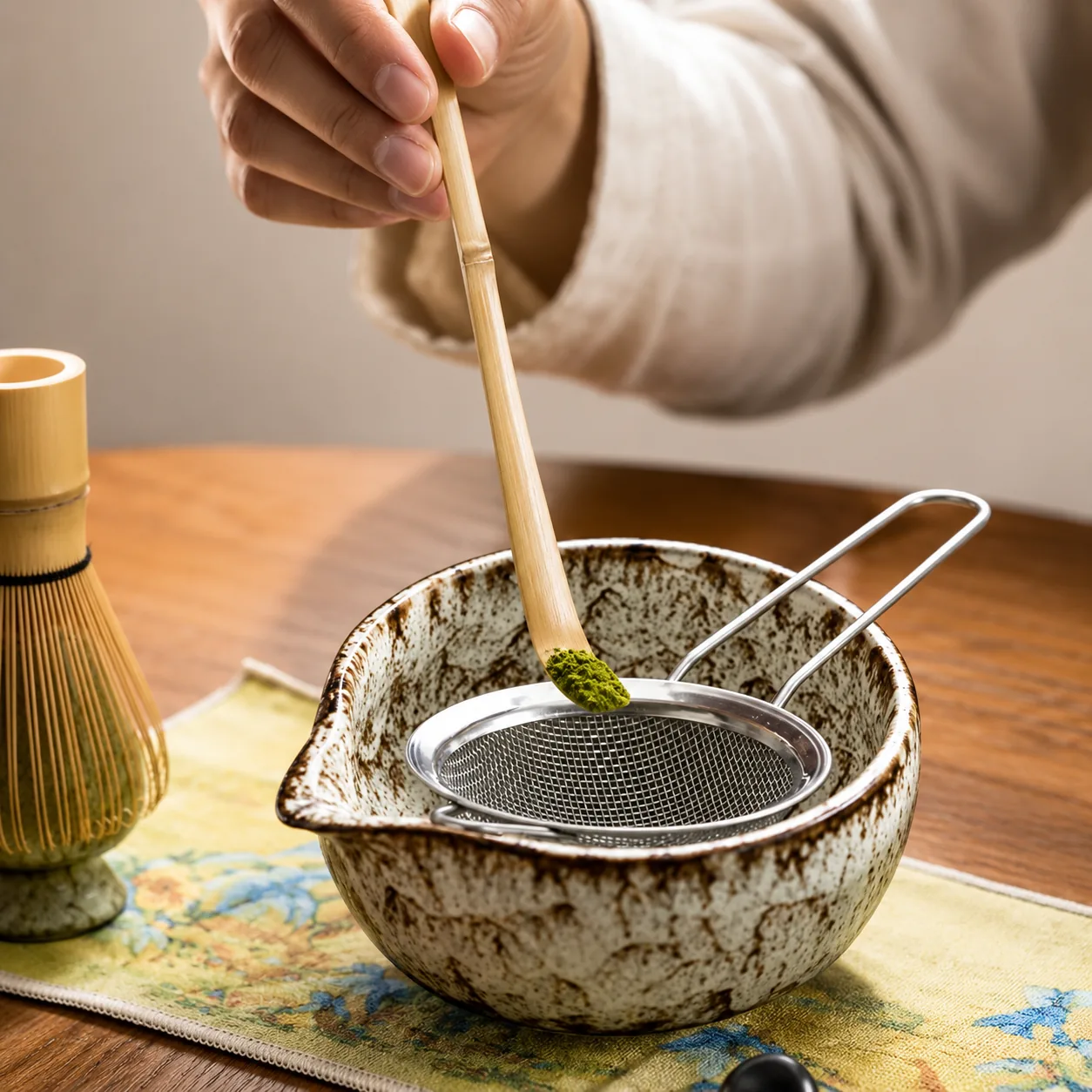
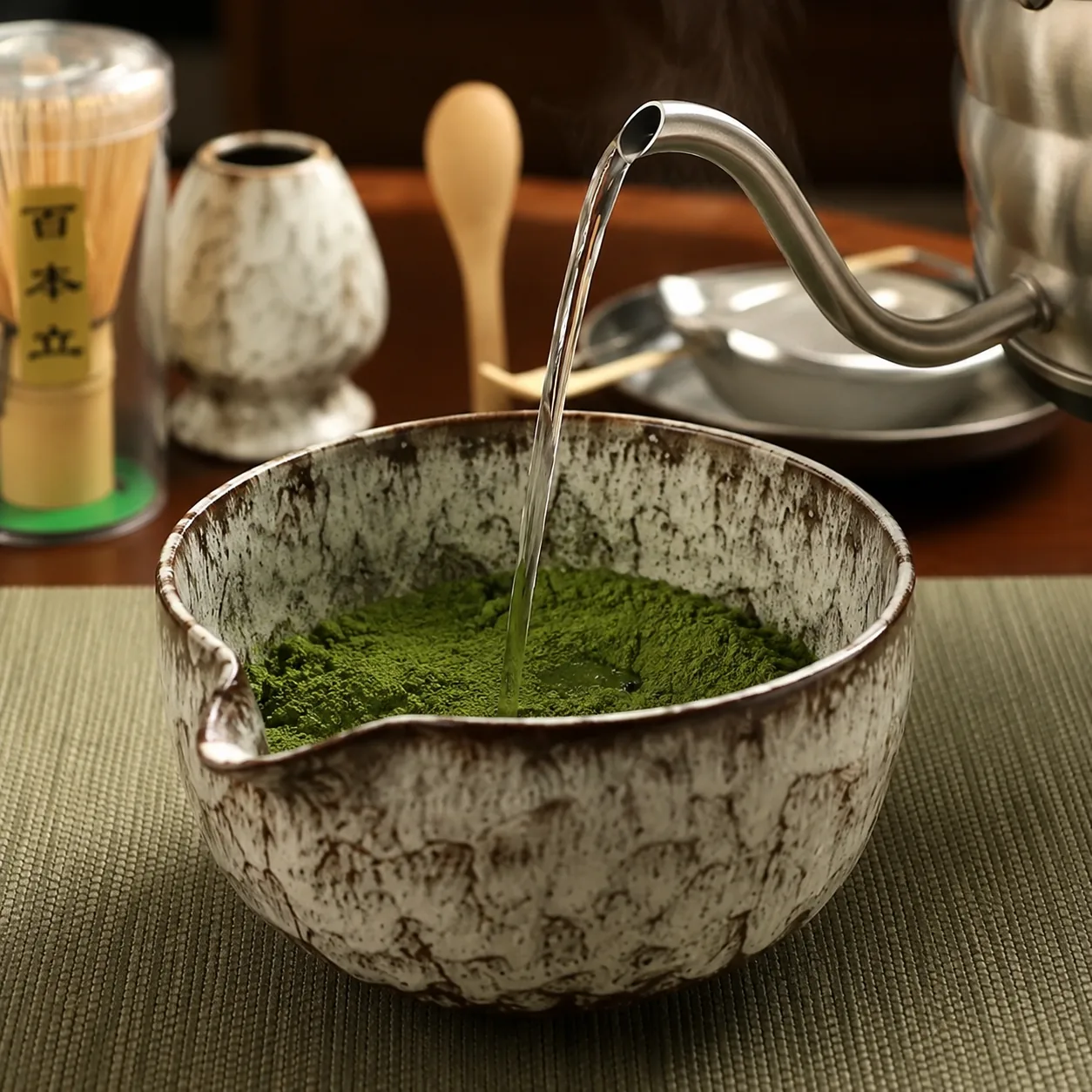
Dose with a chashaku or a small spoon, then add your water. Temperature matters more than most beginners expect: pour boiling water on matcha and you extract harsh, bitter notes that no technique can whisk away. Kyoto tea sellers consistently recommend a warm-not-boiling range; in practice, boil the kettle and let it sit about a minute before pouring.
The W motion, step by step
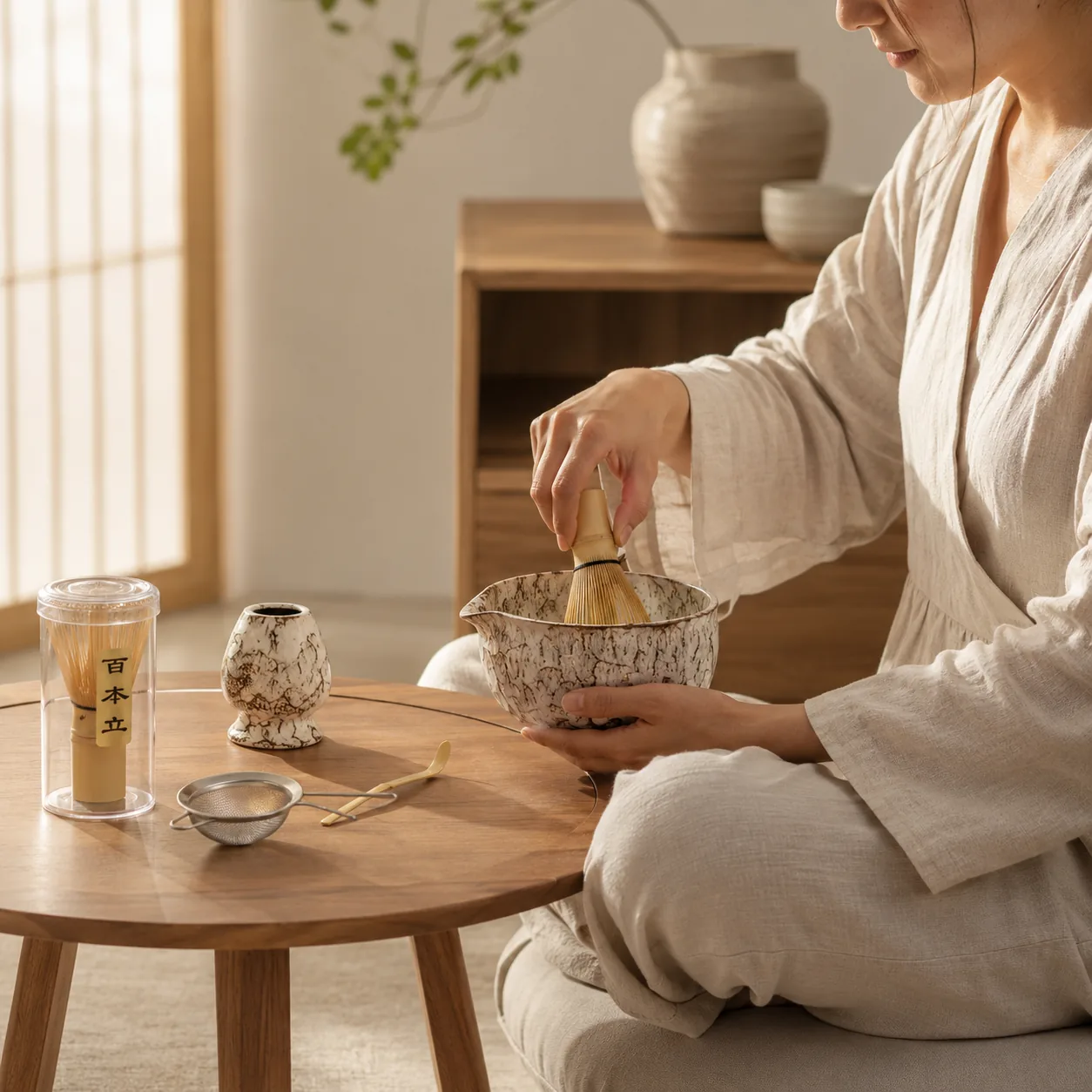
- Hold the whisk like a pencil, vertically. Grip the handle lightly near the top. A tight fist recruits your forearm, and the forearm is exactly the muscle you do not want.
- Plant your other hand on the bowl. Steady the rim so the bowl does not walk across the counter. A bowl with some weight to it, like the ceramic bowl in our set, makes this easier.
- Whisk in a W or M shape, fast and light. Trace the letter across the middle of the bowl, back and forth, from the wrist. The zigzag constantly folds air into the liquid; a circular stir just spins it around and builds almost no foam.
- Keep the tines just off the bottom. Grinding the tines against the ceramic is the number one cause of broken tines. Let the tips flick through the top two-thirds of the liquid.
- Finish on the surface. When foam covers the bowl, slow down and skim the whisk lightly across the top to break the biggest bubbles, then lift it out through the center. Finer bubbles mean a creamier sip.
How long does it take? Usually well under a minute of brisk whisking. If your arm is tiring, you are whisking from the wrong joint, not for too long.
Foam troubleshooting table
| Symptom | Most likely cause | Fix |
|---|---|---|
| No foam, just bubbles at the edge | Circular stirring instead of a W pattern | Zigzag briskly from the wrist across the center |
| Foam appears, then collapses fast | Bubbles too large | Finish with light strokes on the surface |
| Chalky clumps at the bottom | Matcha went in unsifted | Sift every time, no exceptions |
| Bitter, harsh cup | Water too hot | Let boiled water rest about a minute before pouring |
| Tine fragments in the tea | Dry tines, or grinding the bowl bottom | Pre-soak the tines; whisk just off the ceramic |
| Whisk feels stiff and splayed | Poor drying between uses | Dry it tines-down on a chasen holder |
How much matcha and water?
For everyday thin matcha (usucha), the traditional dose is small: tea guides consistently describe two scoops of a chashaku, roughly a gram each, to about 70 ml of water. Thick matcha (koicha) roughly doubles the powder and halves the water, producing something closer to espresso than tea; it is a later chapter for most home drinkers. If you take nothing else away: matcha is dosed in grams, not tablespoons, and oversized scoops are why so many first bowls taste overwhelming. The full dosing story, including where the scoop itself came from, is in our chashaku and matcha scoop guide.
matcha held by one traditional chashaku scoop, with two scoops to roughly 70 ml of water as the standard usucha ratio
— traditional thin-tea dosing standard, accessed 2026
the water temperature range traditional Kyoto preparation sets so catechin bitterness does not overpower the sweeter umami notes
— Kyoto tea preparation standard, accessed 2026
orders for the complete 6-piece set, rated 4.9/5 across verified buyer reviews
— KujiMatcha order data, 2026
After the last sip
The whisking habit that matters most happens after the bowl is empty. Rinse the chasen in warm water right away, never with soap, and let it dry tines-down where air can move around it. The complete routine is in our matcha whisk cleaning guide, and the case for retiring the plastic shipping tube lives in the storage guide. A whisk treated this way keeps its bloomed shape and whips better foam for far longer, which is the entire reason the ceramic whisk holder exists as a product. You can see how real buyers stage theirs on our reviews page, and if you are starting from zero, the gift set guide maps out the full toolkit in one purchase.

Naomi Carter · Matcha tools editor, KujiMatcha
Naomi writes KujiMatcha's guides to matcha tools and whisk care: choosing, using, cleaning, reshaping and storing a bamboo chasen.
You'll pick your color at the secure checkout step.