
· Naomi Carter

Most matcha guides tell you how to keep a whisk in shape. Almost none tell you what to do once it has already lost it, which is where most people actually are when they start searching. The whisk went in a drawer for a month, or stayed in its tube all summer, and the head now looks like a closed tulip instead of an open dome. The tea is fine; the foam has gone thin and streaky.
Here is the part worth knowing before you write the whisk off: the property that ruined it is the same one that fixes it. Bamboo holds whatever shape it dries in. That is why a chasen left flat in a drawer sets flat, and why a chasen dried over a dome sets open. Japanese tea practice named a tool for that job long before anyone wrote a guide about it. This is the recovery routine.
Why a bamboo whisk closes up
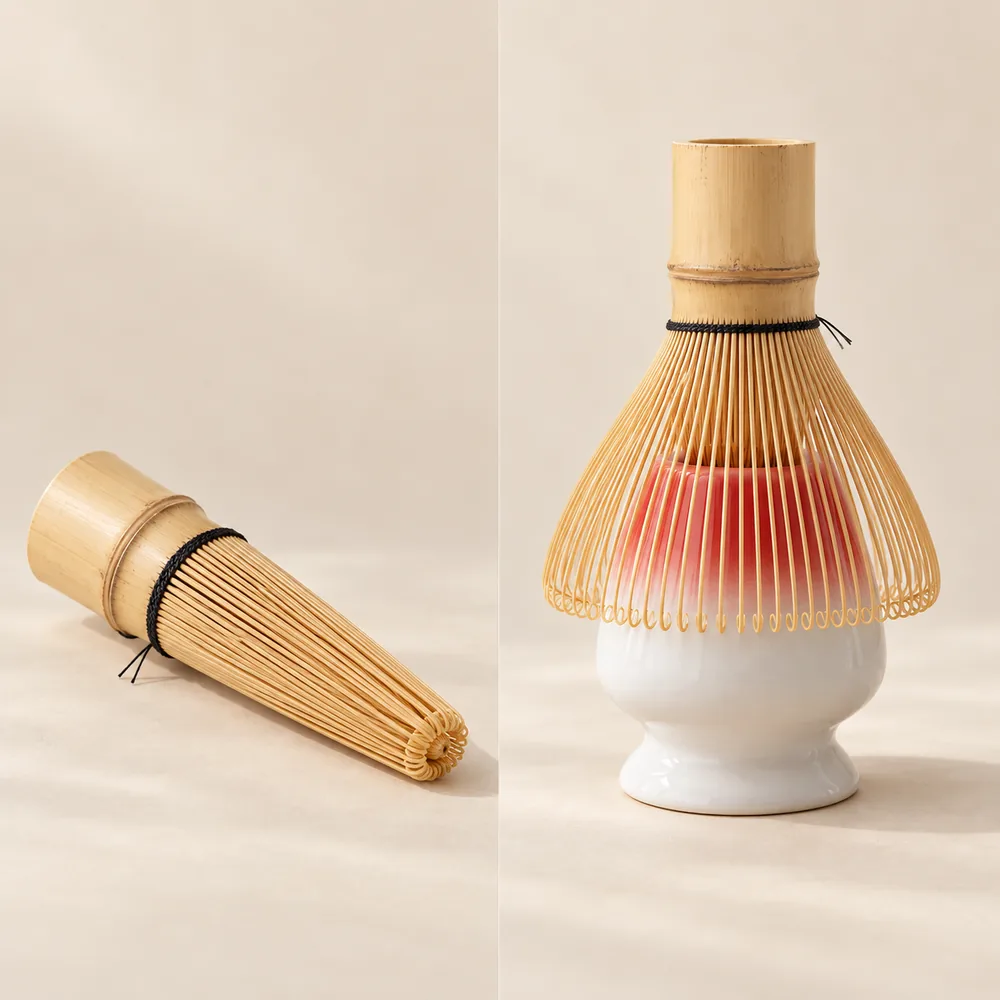
The mechanism is worth picturing, because it explains why the fix works. Each tine is a thin sliver of bamboo split from the same piece as the handle, and the outer row is deliberately curled outward so the head opens like a dome. When you rinse the whisk, every one of those slivers softens. Over the next few hours the water leaves and the bamboo stiffens again, locking in wherever it happened to be sitting.
In a drawer, that is flat. In a cup handle-down, it is sagging under its own weight. Sealed in the plastic cylinder it shipped in, it is squeezed into a tight cone. The case against each of those lives in our matcha whisk storage guide; this page picks up after the damage is done.
Three problems that look the same in the bowl
Pick the whisk up dry and look at it end-on, then flex one outer tine gently with a fingertip. That is the whole diagnosis.
| What you see | What it is | What to do |
|---|---|---|
| Head closed into a narrow cone, tines intact and still springy | Set into a bad drying shape | The reopening routine below |
| Tines pale, stiff, and snapping rather than bending | Bamboo dried out by soap, heat, or a radiator | Change the washing habit first — see the cleaning guide |
| One or two tines missing, the rest bloomed and springy | Ordinary shedding | Fish them out of the foam and carry on |
| Dark spots or a musty smell at the base of the tines | Water trapped where the tines meet the handle | Rinse, then dry tines-down in open air from now on |
| Green tint across the bamboo | Patina from use | Nothing — it is not dirt |
Only the first row is a shape problem, and shape is what responds fastest. If you are in the second row, fix the cause before the shape: bamboo dried out by detergent will not hold a new curve for long. Most whisks people give up on are in row one.
How to reopen a chasen that has curled inward
Five steps, and four of them are things you already do after every bowl. The difference is the order and the attention.
- Soften the tines in warm water. Stand the head in a little warm water for a minute or two, the same brief soak you would give a brand-new whisk. Dry bamboo is stiff and snaps; softened bamboo bends and takes a new set. Never hot water, and never a long soak.
- Whisk a bowl of plain water. No matcha. Whisk briskly for a few seconds with the light zigzag you use for tea, letting the tines flex through the water and push against each other from the inside. This is the step most people skip, and it is the one that actually opens the head rather than just wetting it.
- Shake it out firmly. Several sharp downward shakes over the sink. You are removing the water that would otherwise sit at the base of the tines all night, and the motion itself flicks the outer row outward.
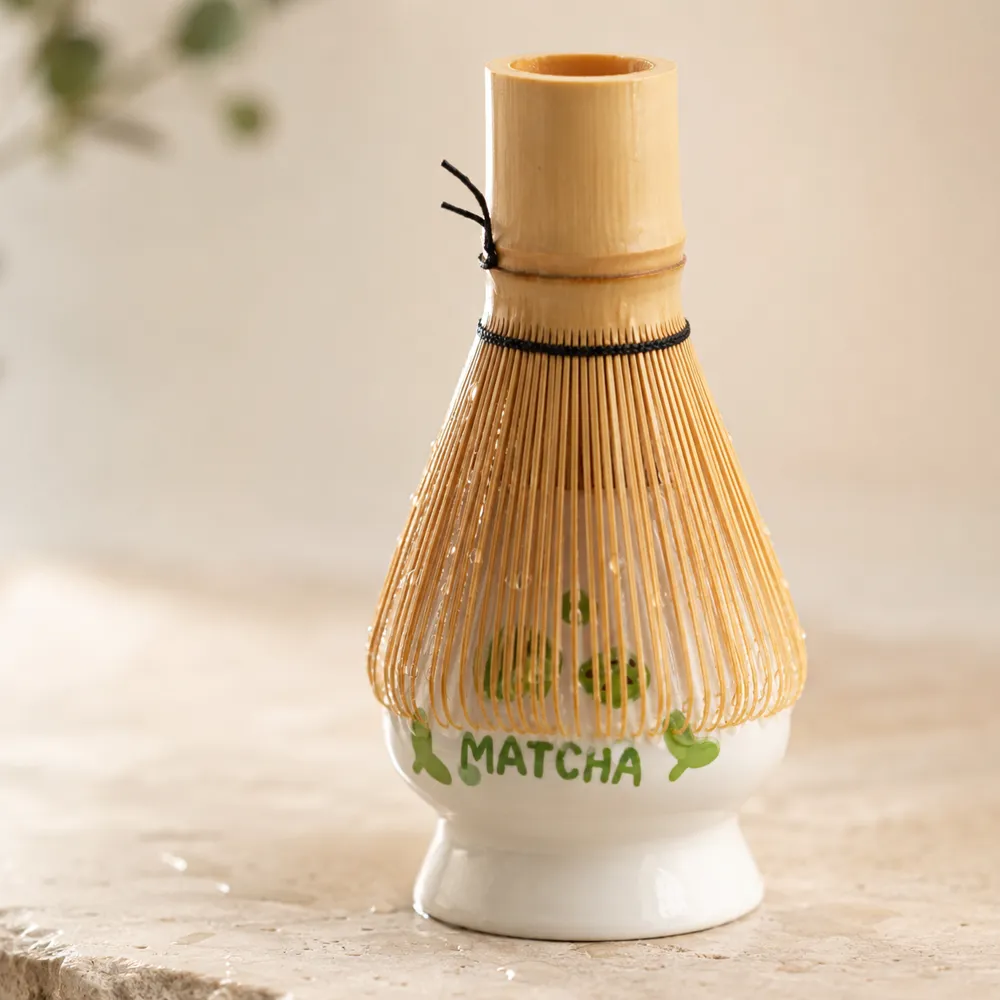
- Set it tines-down over a rounded rest. This is the step that does the correcting. The head drapes over the dome, and it dries in that position over the next several hours rather than in the position it arrived in.
- Repeat with every bowl. One cycle softens and reopens; the accumulation is what sets the shape. Treat it as your normal routine rather than a one-off rescue, and the whisk recovers while you use it.
Notice what is not on this list: no soap, no scrubbing, no clamping the tines open by hand, no overnight soak, nothing warmer than warm. Each of those does more harm than the closed shape you are correcting.
Why the shape of the rest decides whether it works
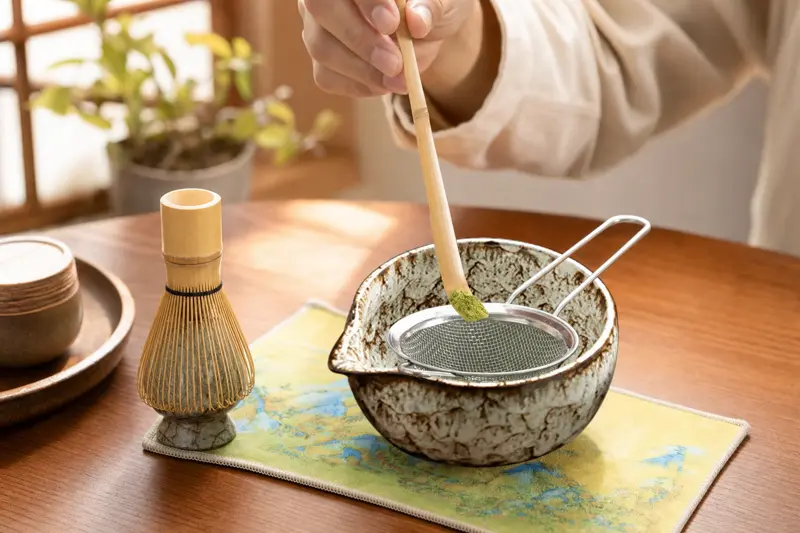
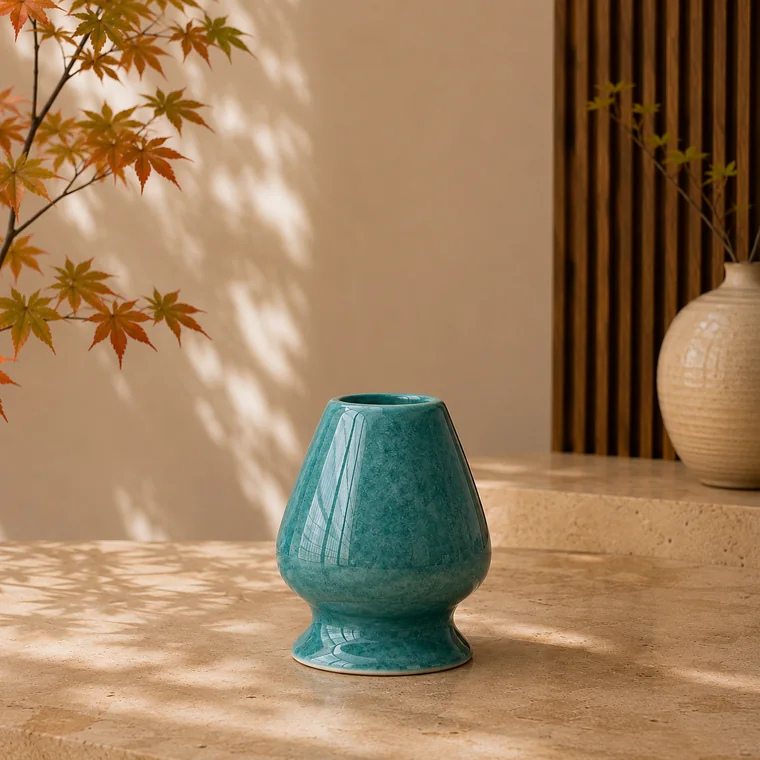
The Japanese name for this object says what it is for. A kuse naoshi is literally a habit corrector: kuse is a bend or an ingrained habit, naoshi is correcting it. The tool was not designed as a display stand that happens to keep whisks tidy. It was designed to take a whisk with a bad habit and dry the habit out of it, which is exactly the job in front of you. The terminology and the traditional profile are covered in full on our chasen holder page.
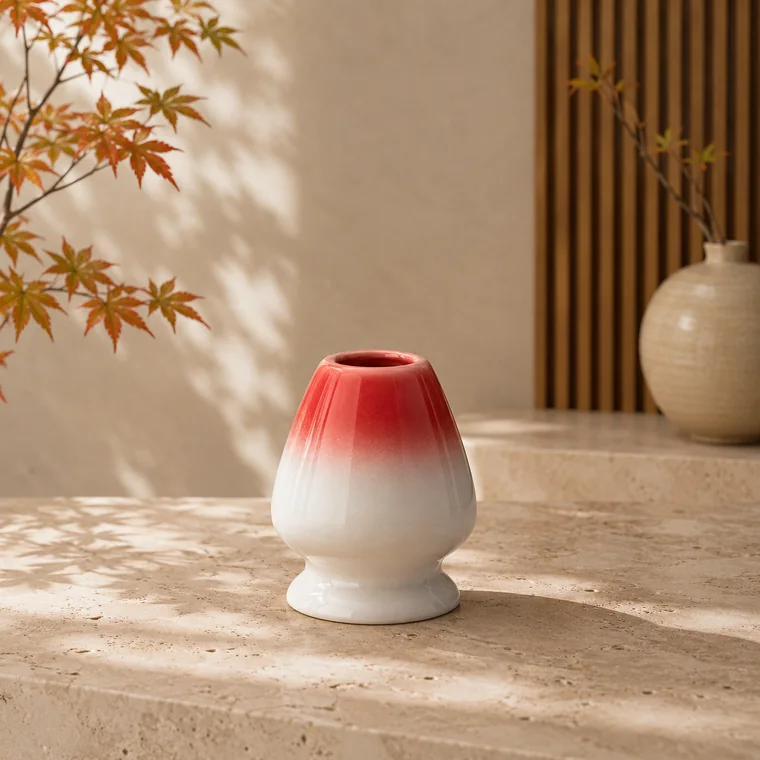
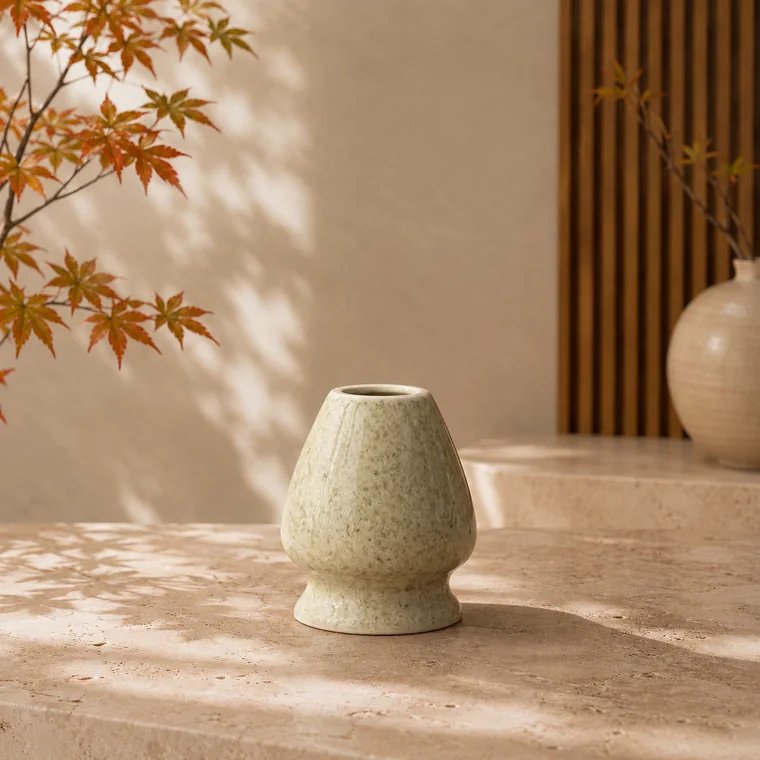
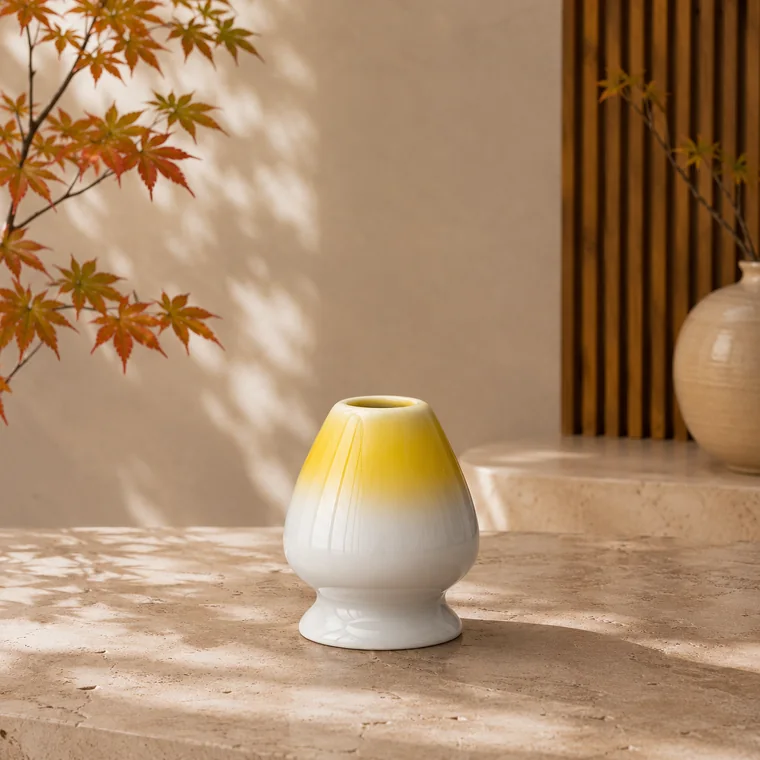
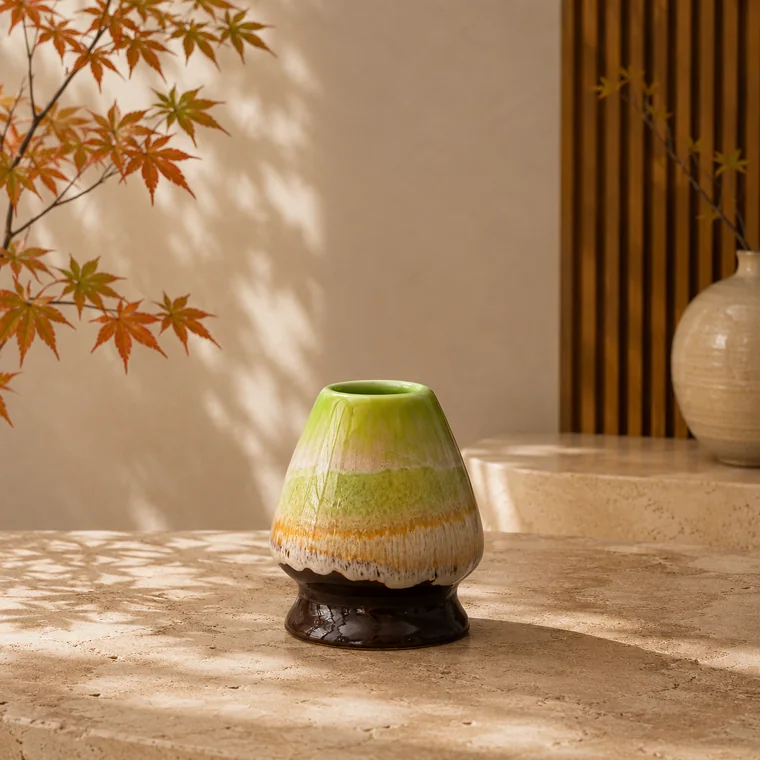
Geometry is the whole trick. The dome has to be a little narrower than the whisk head in full bloom, so the tines rest on the curve and are carried gently outward rather than pushed anywhere. Ours stands 7 cm tall on a 6 cm footprint, which suits the standard bamboo whisks sold with virtually every matcha kit, including the 10.66 cm chasen in our own set. Weight matters too: a light rest slides out from under a wet whisk, and you find the chasen dried in the shape you were trying to correct. Whether the rest should be ceramic, wood, or plastic has its own comparison guide.
What recovery looks like, cycle by cycle
Three things move, and they move in this order. First the head stops looking like a closed cone when dry and starts looking like a dome again. Second the outer tines drape rather than clamp, so the whisk sits on the rest instead of perching on it. Third, and last, the foam comes back: fine, even bubbles across the whole surface instead of coarse ones around the rim.
That third signal is the one that counts, because it is the only one that measures the whisk doing its job. Buyers who switch from drawer storage to a holder tell us the difference shows up in the cup within a week. If your foam is still coarse once the head has visibly reopened, the problem has moved somewhere else, and the whisking technique guide is where to look next — it covers the wrist motion, the water, and how long to keep going.
What a whisk does not come back from
Two things are worth being straight about, because they save you effort on the wrong whisk. A tine that has snapped does not grow back — though that is rarely a problem, since every bamboo whisk sheds a tine or two over its life, especially in the first weeks, and one missing tine changes nothing in the bowl. Fish it out of the foam and keep going.
The second is bamboo that has genuinely dried out, which you recognize by tines that snap instead of bending. That traces to a cause you control: detergent, a dishwasher, or drying on a radiator or in direct sun. Fix the cause and the next whisk lasts on a different timescale entirely. A dried-out whisk still makes tea, so keep it in service as a backup for iced matcha, where the foam does less work.
Everything else is shape, and shape responds. That is the part most people never find out before replacing a chasen that only needed somewhere better to dry.
The numbers behind this guide
the rounded cone this routine dries on (2.8 × 2.4 in), sized just under a standard whisk head so the tines drape outward instead of being pushed
— KujiMatcha product spec sheet, 2026
verified orders for the ceramic whisk holder, rated 4.8/5 by verified buyers
— KujiMatcha order data, 2026
of Japan's chasen production comes from Takayama, Nara, where whisks have been carved by hand for roughly 500 years — the bloom is shaped deliberately, which is why it is worth restoring
— KOGEI JAPAN traditional crafts directory, 2026
Keeping the bloom you just got back
Recovery and maintenance are the same routine; you simply stop thinking of it as a rescue. Rinse in warm water right after the bowl, no soap. Shake firmly. Set the whisk tines-down on the rest, in open air, away from a radiator, a stovetop, or a sunny windowsill. The drying position that reopened the whisk is the one that keeps it open, and the chasen becomes a slow-wearing tool instead of a consumable.
"High quality ceramic. Colors are true to photo," writes Adriana, a verified buyer in Portugal. More of them, photos included, are on our reviews page.
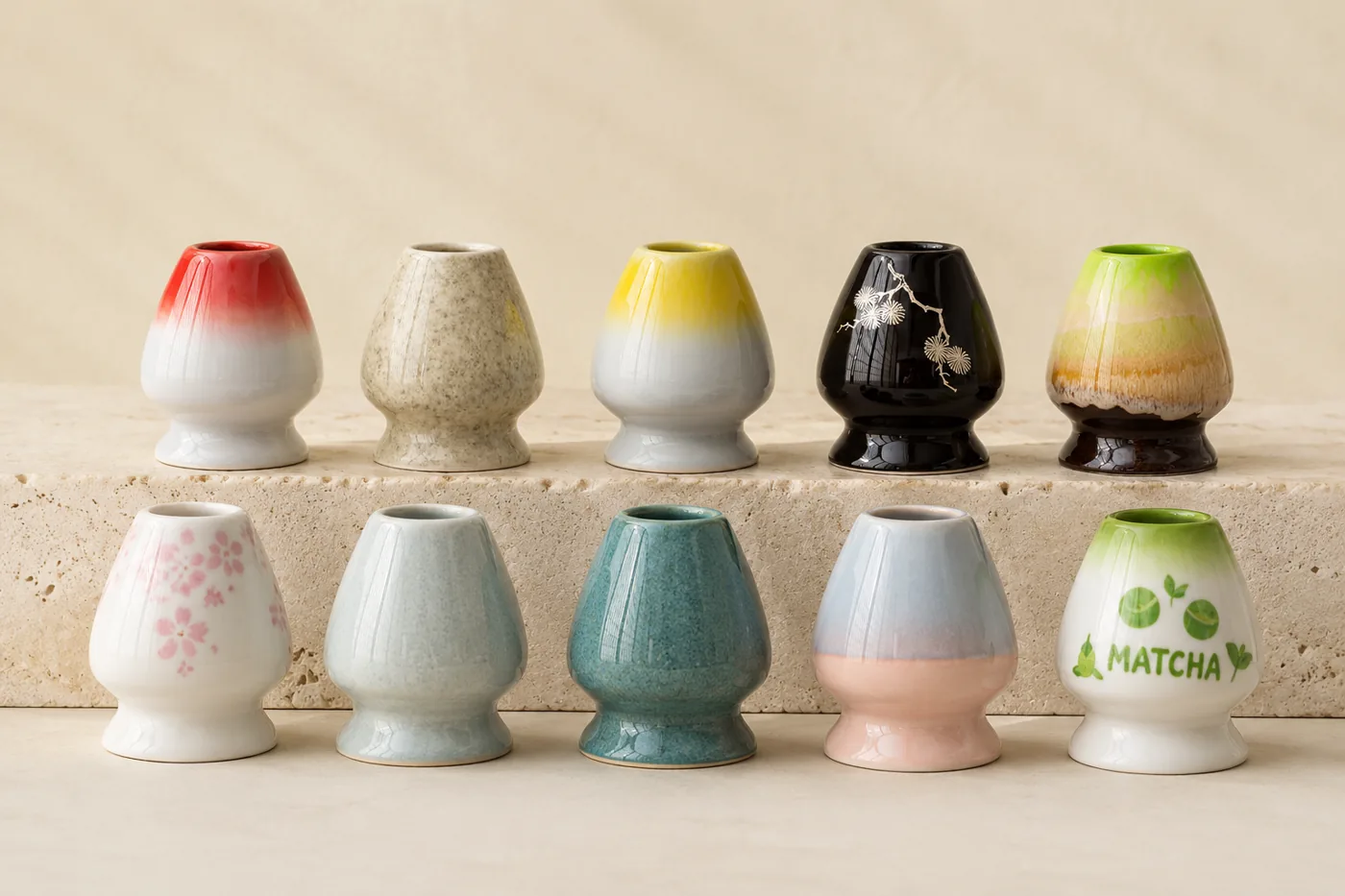
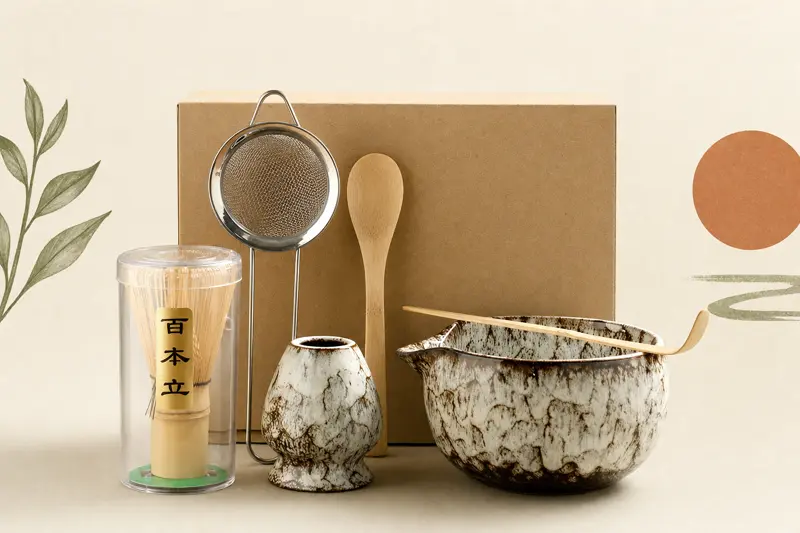
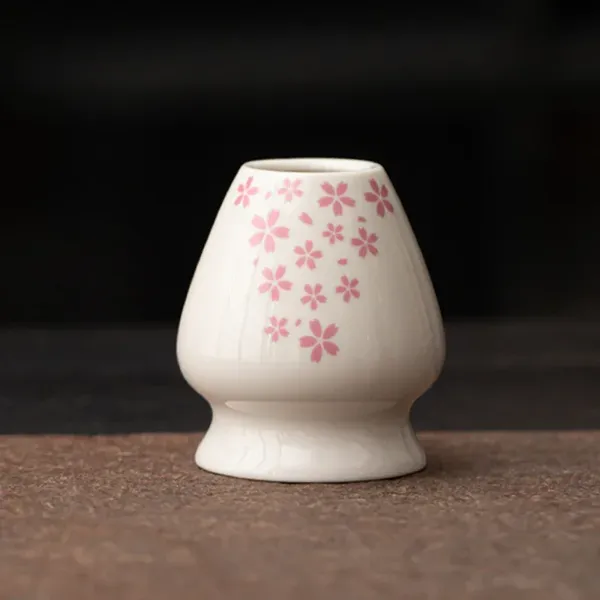
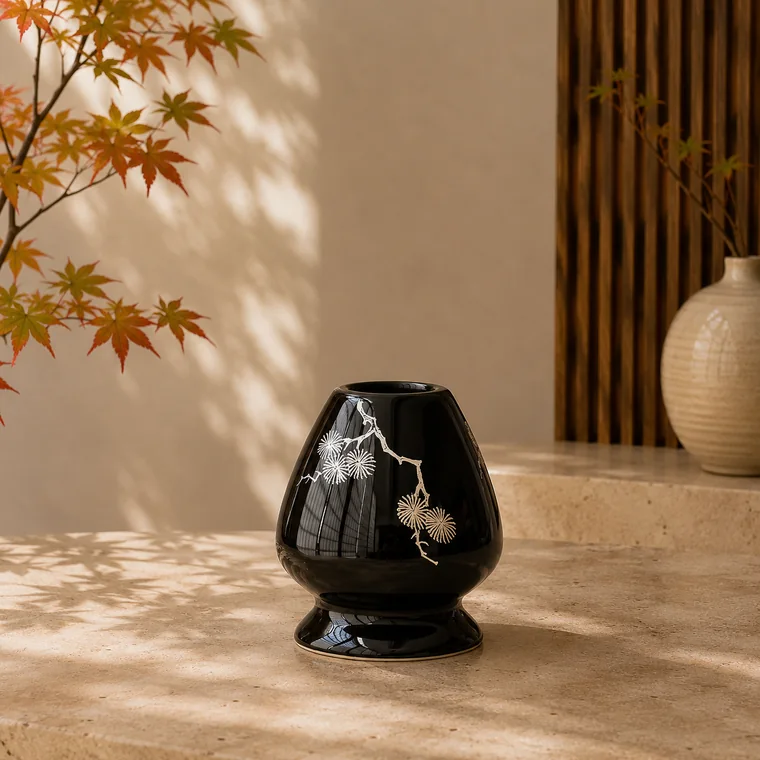
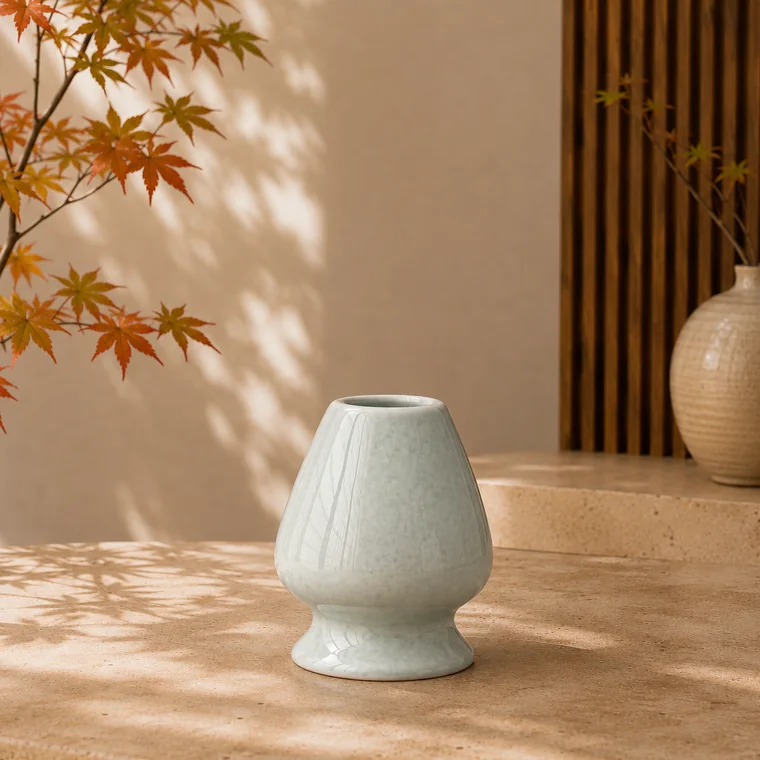
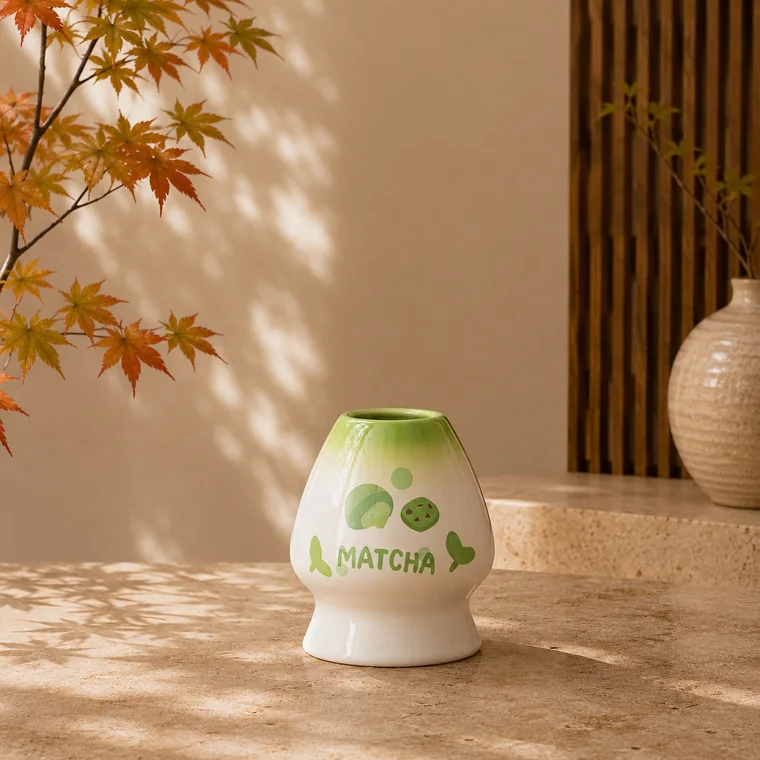
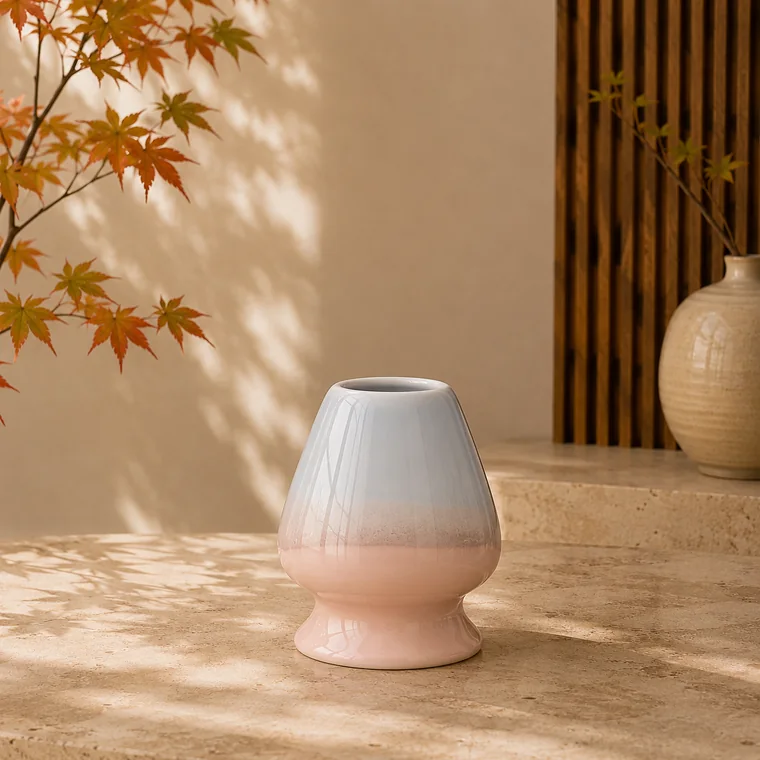
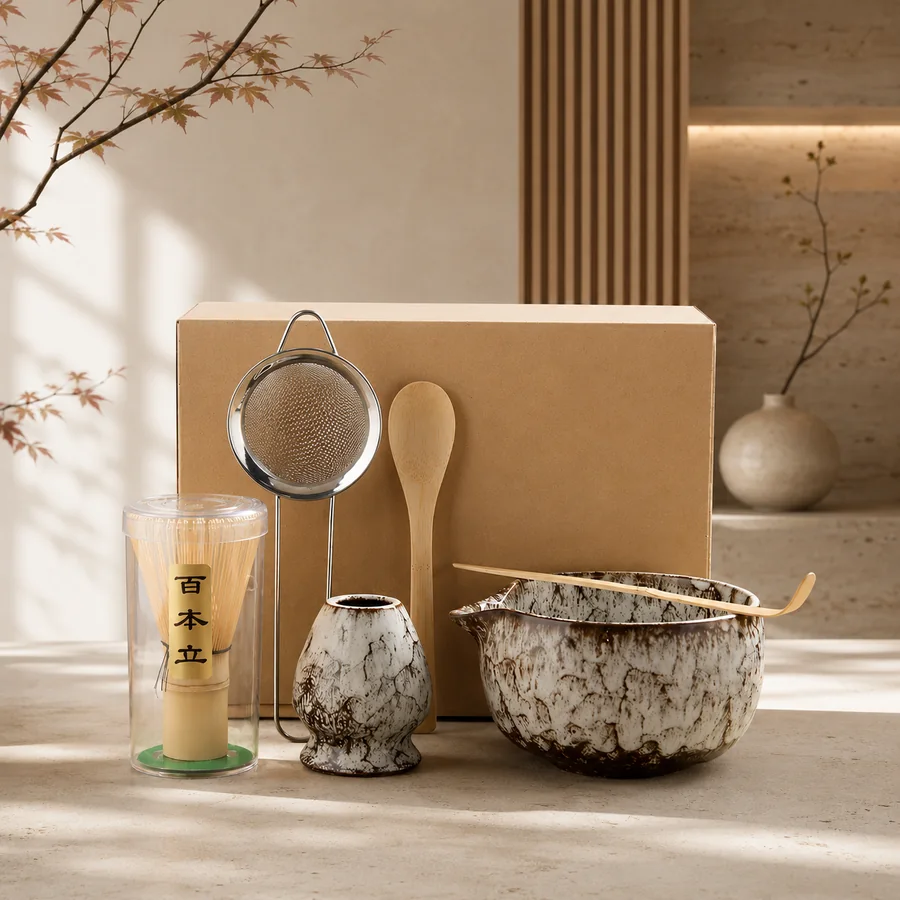
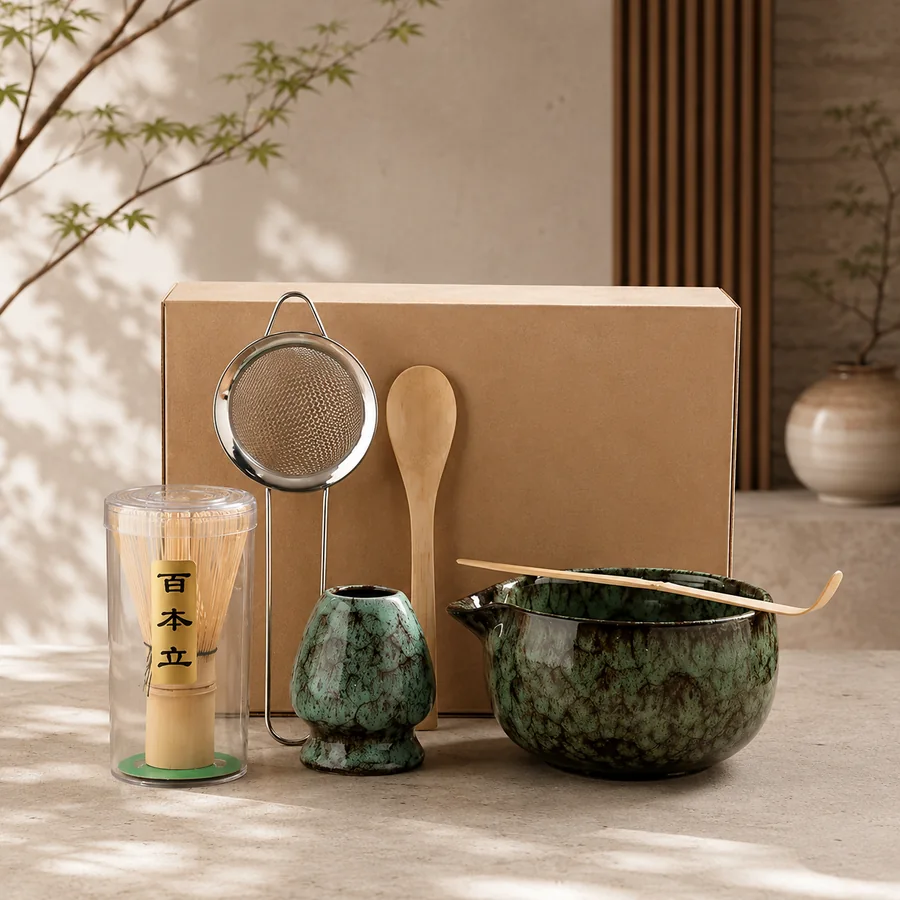
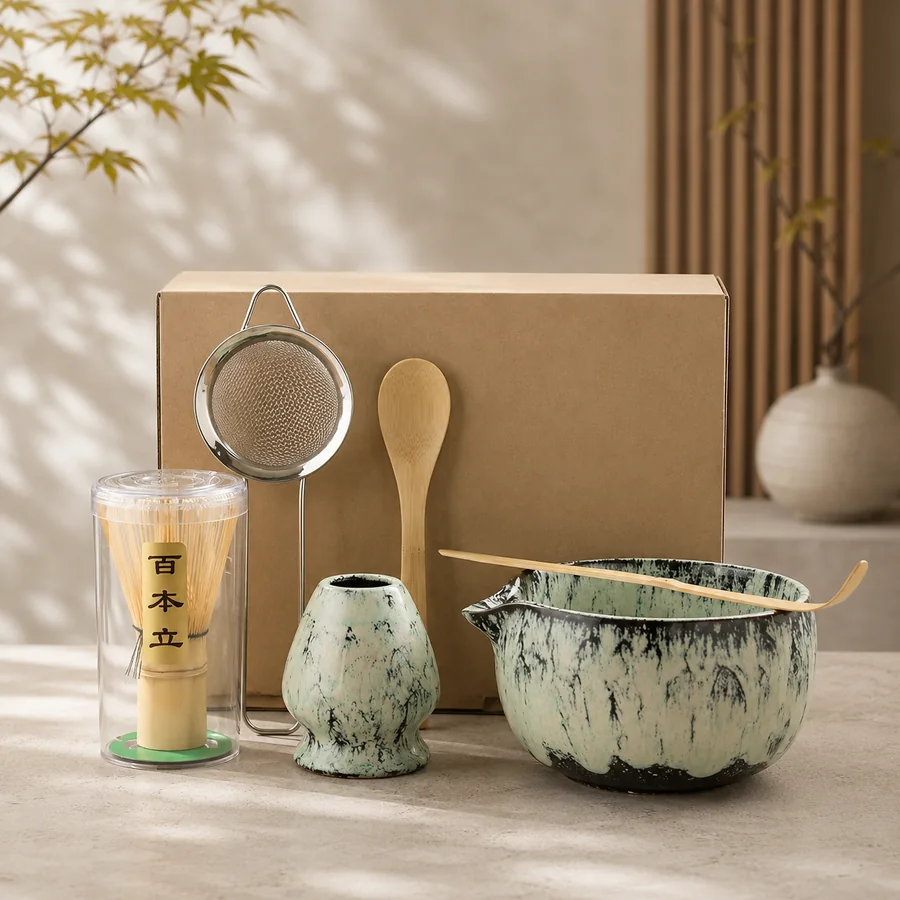
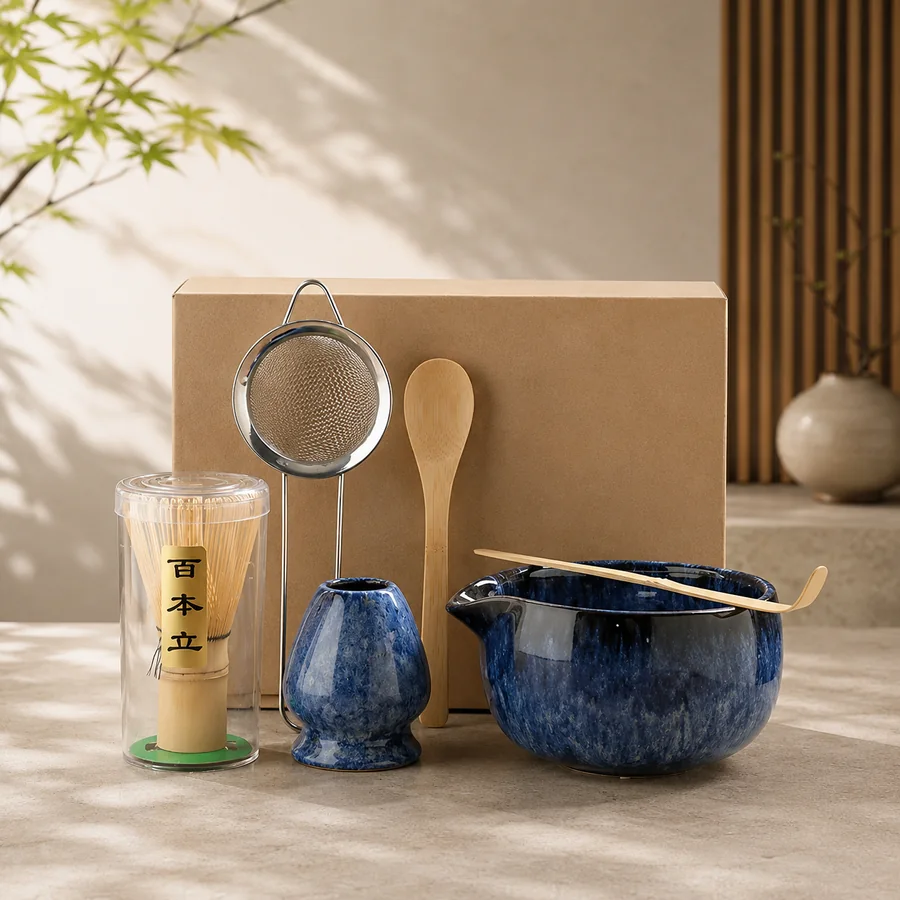
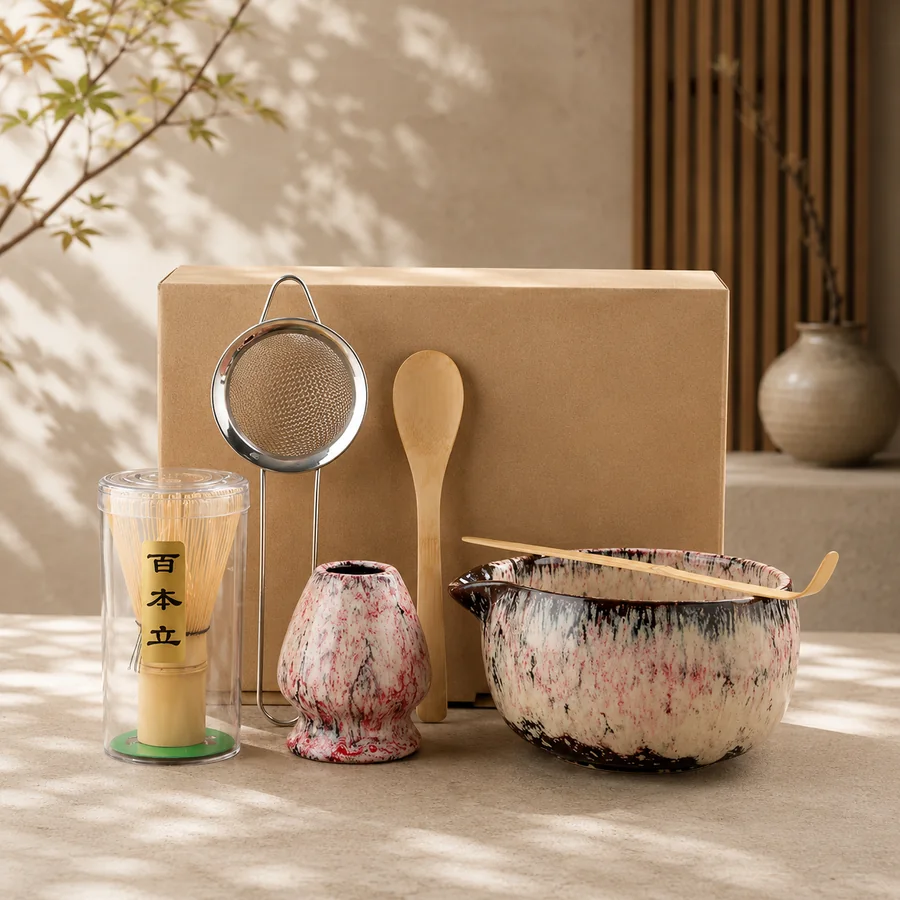
Ours is the glazed ceramic matcha whisk holder: 7 by 6 cm, ten glazes, $14.95, with free shipping and a 30-day money-back guarantee. If you are rebuilding the whole setup rather than rescuing one piece, the complete 6-piece set pairs a matching 7.5 cm rest with the bowl, chasen, sieve, teaspoon, and chashaku scoop for $49.95. Buying it for someone else, or starting a friend off in the right habits from day one? The matcha gift set guide covers that decision.
Whisk shape questions, answered
Can a matcha whisk that dried in a drawer be saved?
Usually, yes. Bamboo holds the shape it dries in, which is the same property that lets you dry it back open. Soften the tines in warm water, flex them in a bowl of plain water, then dry the whisk tines-down over a rounded ceramic rest. Each drying cycle pulls the tines a little further back toward their original curve.
How many drying cycles before the bloom comes back?
Judge it by the head, not by a count. After each cycle, look at the whisk once it is bone dry: the outer tines should sit a little wider than the day before, and the head should look like a dome rather than a closed cone. When the outer row drapes instead of clamping, the shape has taken.
Should I soak my chasen overnight to open the tines faster?
No. A brief warm soak of the tines is all bamboo wants before whisking; a long soak waterlogs the base where the tines meet the handle, which is the spot that goes musty. Short soak, gentle flex in the bowl, firm shake, then dry it tines-down in open air.

Naomi Carter · Matcha tools editor, KujiMatcha
Naomi writes KujiMatcha's guides to matcha tools and whisk care: choosing, using, cleaning, reshaping and storing a bamboo chasen.
You'll pick your color at the secure checkout step.